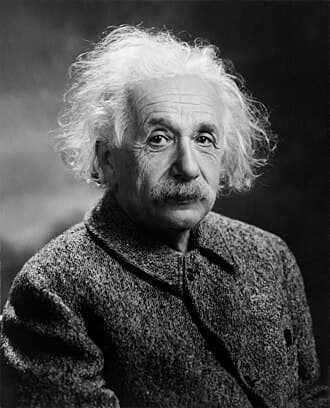
Co-led anti-lynching efforts and urged President Truman to prosecute lynchers
Actively supported the American Crusade to End Lynching and wrote to President Truman urging federal prosecution and anti-lynching legislation.
Supporting sources
Achievements and contributions.
Actively supported the American Crusade to End Lynching and wrote to President Truman urging federal prosecution and anti-lynching legislation.
Supporting sources
Promoted and fundraised for the Hebrew University of Jerusalem, later leaving his literary estate and archives to the institution.
Supporting sources
This fact is locked. Unlock all 181 surprising facts now.
Turned down the ceremonial presidency of Israel in 1952, describing it as a conflict with his conscience and beyond his abilities.
Supporting sources
After World War II, became a prominent advocate for nuclear disarmament, warning of atomic weapons’ dangers and co-signing the Russell–Einstein Manifesto.
Supporting sources
This fact is locked. Unlock all 181 surprising facts now.
In a 1917 publication Albert Einstein described the processes of spontaneous and stimulated emission of radiation, concepts that later became the fundamental mechanism for laser and maser technology, profoundly impacting modern optics and communications.
Supporting sources
Harms and documented concerns.
A 1914 list of rules for his wife Mileva Marić told her to serve his meals, keep his rooms tidy, and expect no affection. They divorced in 1919.
Supporting sources
Sent a 1914 letter to Mileva Marić demanding menial service, no intimacy, and her obedience during their separation.
Supporting sources
This fact is locked. Unlock all 181 surprising facts now.
Was investigated for decades by the FBI as a suspected subversive, but no evidence of Communist Party membership was found.
Supporting sources
Publicly condemned McCarthy-era hearings as more dangerous than Communists and encouraged intellectuals to resist testifying, provoking loyalty attacks.
Supporting sources
This fact is locked. Unlock all 181 surprising facts now.
Biographers and critics observe Einstein’s abandonment of earlier absolute pacifism and a changing, sometimes-criticized stance on Zionism under political pressures.
Supporting sources
This is a perspective tool, not a truth engine. AI can miss context or make mistakes. Read the linked sources, distinguish allegations from established facts, and form your own view. Full Pass saved 9/21/2026.
Read Einstein’s scientific recognition with the exact award wording in mind. The Nobel record highlights the photoelectric law; it is not a blanket endorsement of every idea associated with him.
Physics Nobel prize year: theoretical physics, especially the photoelectric law.
Nobel Prize: 1921 Physics awardThe deferred 1921 prize was awarded in 1922.
Nobel archives: the dual nature of lightA prize year and an award date can differ. The Nobel archives discuss the committee’s reservations; use that historical account rather than assuming that the prize was for relativity.
What did Einstein win the Nobel Prize for? →Supplemental notes prepared with AI assistance and checked against the linked records on October 8, 2026. This source check covers these notes, not every claim in the generated profile. Method and corrections.